
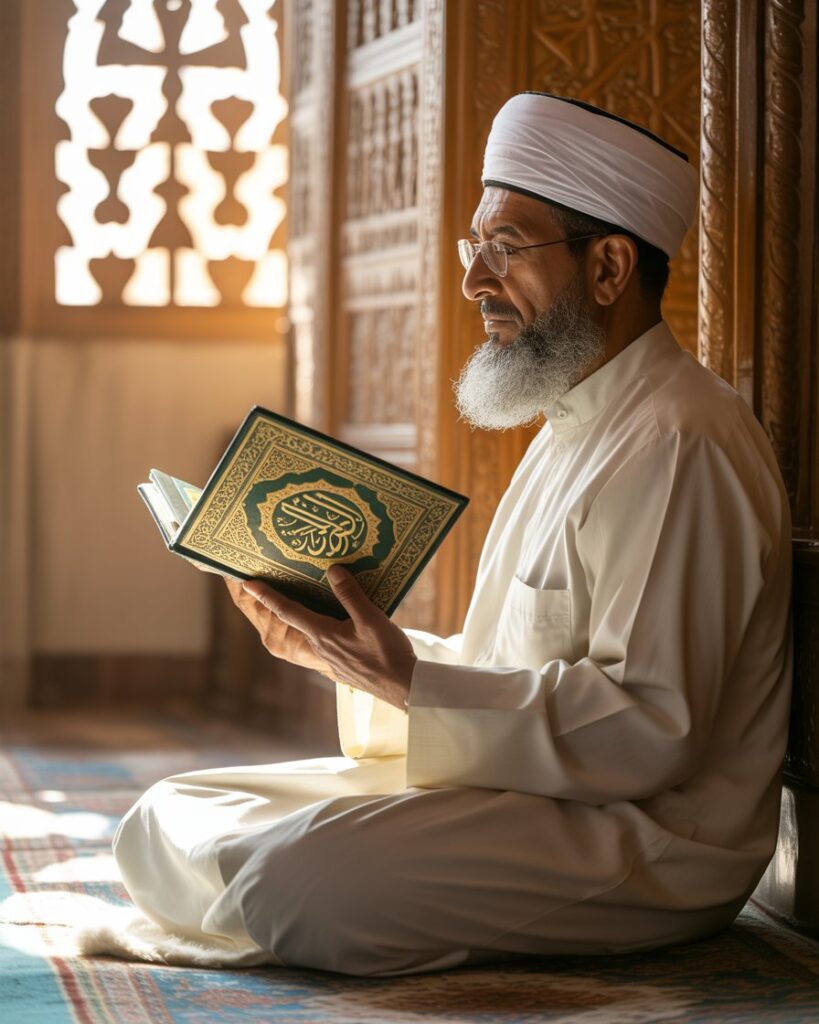
Egypt Qari of the Quran – Famous Egyptian Quran Reciters and Their Beautiful Tilawat has inspired millions of hearts across the world. When you listen to an Egyptian Qari, you feel depth, control, and emotion in every verse. Egypt has produced some of the most respected Quran reciters in Islamic history. Their voices filled mosques, homes, and radio stations for decades. Many Muslims grew up listening to their recordings.
In this article, you will discover why the Egypt Qari of the Quran – Famous Egyptian Quran Reciters and Their Beautiful Tilawat became globally admired. You will learn about legendary Egyptian reciters, their unique tilawat style, the maqamat system, and how their recitation shaped the Muslim world.
Why Egypt Is Known as the Heart of Quran Recitation
Egypt holds a special place in Islamic scholarship. For over a thousand years, students traveled to study at Al-Azhar University. This institution became a center for Tajweed, Tafsir, and Quran memorization. Generations of scholars trained there. Naturally, strong reciters emerged from this environment.
During the early 20th century, Egypt led the world in Quran broadcasting. The Egyptian radio station began airing live recitations in the 1930s. Families gathered around radios to listen. That simple act helped spread Egyptian tilawat across Africa, Asia, and the Middle East. Soon, the phrase Egypt Qari of the Quran became a mark of excellence.
What Makes an Egypt Qari of the Quran Unique
An Egyptian Qari does not simply recite. He performs with control and deep awareness of sound. The pronunciation is clear. The breath is steady. The transitions between tones feel smooth. You can sense both discipline and emotion in the voice.
Egyptian reciters master the science of Tajweed first. Only then do they develop melody. This balance makes their tilawat powerful. They avoid exaggeration. They avoid rushing. Instead, they allow the verses to breathe. That is why their recitation feels alive and sincere.
The Egyptian Maqamat System Explained
To understand the beauty of Famous Egyptian Quran Reciters and Their Beautiful Tilawat, you must understand maqamat. Maqamat are melodic modes. Each maqam creates a different feeling.
For example, Bayati feels warm and spiritual. Hijaz feels deep and emotional. Nahawand carries a soft sadness. Egyptian Qaris move between these maqamats carefully. They never break the Tajweed rules. They only enhance meaning.
Below is a simple table explaining common maqamat used by Egypt Qari of the Quran masters.
| Maqam Name | Emotional Tone | Common Use in Tilawat | Listener Effect |
| Bayati | Warm and calm | Opening verses | Comfort |
| Hijaz | Deep and powerful | Stories of Prophets | Reflection |
| Nahawand | Soft sadness | Verses of warning | Serious thought |
| Rast | Balanced and strong | Long passages | Stability |
| Saba | Emotional | Duas and endings | Tears and humility |
When you listen carefully, you can hear these shifts. They are not random. They are trained and deliberate.
Legendary Egypt Qari of the Quran
Egypt produced reciters who became global icons. Their recordings still circulate today.One of the earliest legends was Muhammad Rifat. He was among the first voices broadcast on Egyptian radio. His tone was soft yet commanding. Many listeners wept during his recitations.Another giant was Mustafa Ismail. He mastered maqamat like few others. His live recitations often lasted hours. Yet the audience stayed silent and attentive.
Mahmoud Khalil al-Hussary set a different standard. His strength was precision. Students worldwide use his recordings to learn Tajweed. His complete Mushaf recording remains a teaching reference.
Then came Abdul Basit Abdus Samad. His voice reached villages and cities across continents. His Surah Al-Fajr recording became world famous. Many consider him the most recognized Egyptian Qari of the Quran in modern history.
Modern Egyptian Quran Reciters Continuing the Legacy
The tradition did not stop. Later figures like Muhammad Siddiq al-Minshawi blended humility with emotional depth. His recitation feels intimate. Many listeners say it touches the heart directly.
Today, Egyptian recitation continues through mosque imams and Quran competitions. Their voices circulate through YouTube and Islamic apps. Technology changed the medium. The style remains rooted in classical Egyptian training.
Egyptian Quran Recitation on Radio and TV
In 1934, Egyptian state radio began Quran broadcasts. That decision changed history. Villages in Sudan, Pakistan, and Indonesia tuned in. They learned pronunciation by listening daily.
Later, television expanded that reach. Ramadan programs featured famous Egyptian Qaris nightly. Cassette tapes followed. Then CDs. Now streaming platforms carry the same voices worldwide. Egyptian tilawat became a global standard because of media consistency.
Impact of Famous Egyptian Quran Reciters on the Muslim World
Egyptian Qaris influenced reciters in Malaysia, Nigeria, Turkey, and South Asia. Many international Quran competition winners trained using Egyptian recordings. Judges often expect similar pronunciation and melodic control.
The table below shows the global influence of selected Egypt Qari of the Quran legends.
| Qari Name | Era | Signature Strength | Global Influence Level |
| Muhammad Rifat | Early 1900s | Emotional clarity | High |
| Mustafa Ismail | Mid 1900s | Maqam mastery | Very High |
| Al-Hussary | Mid 1900s | Tajweed precision | Very High |
| Abdul Basit | Mid 1900s | Vocal power | Extremely High |
| Al-Minshawi | Late 1900s | Spiritual tone | High |
Their recordings shaped how millions learned to recite. That is a real impact.
How to Learn the Egyptian Style of Tilawat
If you want to recite like a Famous Egyptian Quran Reciter, start with Tajweed. Without correct articulation, melody loses value. Practice letters slowly. Record yourself. Compared with Egyptian masters.
Next, study maqamat basics. Do not rush. Listen repeatedly to one Qari. Imitate short passages. Gradually expand. Consistency matters more than speed.
Below is a simple learning structure.
| Step | Focus Area | Practice Method | Duration |
| 1 | Tajweed rules | Daily reading | 3 months |
| 2 | Breath control | Long ayah repetition | 1 month |
| 3 | Basic maqamat | Guided lessons | 2 months |
| 4 | Full surah practice | Recording comparison | Ongoing |
Learning the Egyptian style takes patience. But the reward is beautiful tilawat.
Comparison of Top Egypt Qari of the Quran
The following comparison highlights differences in approach.
| Qari | Style | Best Known For | Teaching Value |
| Abdul Basit | Powerful and melodic | Public recitations | Inspiration |
| Al-Hussary | Clear and structured | Full Mushaf recording | Tajweed training |
| Mustafa Ismail | Complex maqamat | Live events | Advanced learners |
| Al-Minshawi | Soft and emotional | Reflective recitation | Spiritual focus |
| Muhammad Rifat | Classical tone | Early broadcasts | Historical importance |
Each reciter has a unique charm. Your preference may depend on your personality.
Case Study: Why Abdul Basit Became Globally Loved
When Abdul Basit Abdus Samad toured outside Egypt, huge crowds gathered. In some cities, tens of thousands attended. His voice carried strength yet tenderness. He controlled breath for long passages without strain.
Listeners describe his tilawat as majestic. One famous quote often repeated says, “When Abdul Basit recites, the Quran feels alive.” That emotional connection explains his unmatched fame.
Conclusion
Egypt Qari of the Quran – Famous Egyptian Quran Reciters and Their Beautiful Tilawat remains a symbol of excellence in Quran recitation. Egypt nurtured masters who combined Tajweed precision with emotional maqamat. Their voices shaped global standards and inspired generations. From early radio broadcasts to modern streaming, Egyptian tilawat continues to guide learners worldwide. If you want to improve your recitation, study their recordings carefully. Their legacy proves that discipline, sincerity, and skill can transform simple reading into powerful worship.
FAQ”s
Why is Egypt famous for Quran reciters
Egypt invested heavily in Quran education and broadcasting. This created global exposure.
Who is the most famous Egypt Qari of the Quran
Many consider Abdul Basit Abdus Samad the most globally recognized.
What makes Egyptian tilawat different
It combines strict Tajweed with controlled melodic maqamat.
Can beginners learn Egyptian maqamat
Yes, but they must master Tajweed first.
Are Egyptian recitations used for teaching
Yes. Many Islamic schools use Al-Hussary recordings for Tajweed training.